by cpwinch
Share
How to Calculate Winch Pulling Capacity for Heavy Duty Applications
Experience
30+ Years Rich Experience
Digital Solutions
R&D Team standing by
24/7 Support
We are here for you
Selecting the correct winch is not only about choosing a larger motor or a bigger drum. In heavy industrial projects, the pulling capacity of a winch must match the actual working conditions, including load weight, friction, rope arrangement, working angle and safety requirements.
A wrong calculation may cause low performance, equipment damage or unnecessary investment.
For engineers and buyers, understanding how to calculate winch pulling capacity helps select the right equipment for construction, marine, mining and industrial applications.
What Is Winch Pulling Capacity?
Winch pulling capacity refers to the maximum pulling force that a winch can generate during operation.It is usually measured in:
- Tons (t)
- Kilonewtons (kN)
- Pounds (lbs)
For example, a 20-ton winch means the equipment can provide approximately 20 tons of pulling force under specific working conditions. However, the rated capacity does not always equal the actual working capacity because many factors affect the final pulling force.
Main Factors Affecting Winch Pulling Capacity
1. Load Weight
The first factor is the total weight of the object being moved.
A heavier load requires greater pulling force.
For example:
- Moving a steel structure requires higher pulling capacity.
- Pulling a vessel during shipyard operation needs stronger marine winch equipment.
- Underground mining applications may require continuous pulling force.
The winch should always have enough capacity above the actual load requirement.
2. Friction Resistance
The pulling force is not only determined by the load weight.
Surface conditions also affect the required capacity.
Common examples:
- Steel sliding on rails
- Equipment moving on uneven ground
- Ship pulling operations
- Cable pulling projects
Higher friction means higher winch capacity is required.
3. Wire Rope Diameter and Length
The wire rope directly influences winch performance.
A thicker rope usually provides:
- Higher breaking strength
- Better durability
- Longer service life
However, thicker rope also requires a larger drum and stronger winch structure.
4. Drum Layers
Many buyers ignore drum layers when selecting a winch. The pulling force is usually highest when the rope is on the first layer.
As more rope is wound onto the drum, the effective pulling force decreases because the drum radius increases. Therefore, engineers should check:
- Rated pulling force
- Maximum rope capacity
- Number of rope layers
Basic Formula for Winch Pulling Capacity
The basic calculation can be explained as:
Required pulling force = Load resistance × Safety factor
- Load resistance includes weight and friction
- Safety factor is normally added to handle unexpected conditions
For industrial applications, engineers usually select a winch with extra capacity instead of operating at maximum load continuously.
How to Select the Right Winch Capacity?
Light Duty Applications
Suitable for:
- Small pulling jobs
- Workshops
- Maintenance work
Typical capacity:
Below 5 tons
Medium Duty Applications
Used for:
- Construction projects
- Equipment movement
- Cable pulling
Typical capacity:
5–50 tons
Heavy Duty Applications
Used for:
- Shipyards
- Mining operations
- Offshore projects
- Large construction projects
Typical capacity:
50 tons and above.
Electric Winch vs Hydraulic Winch for High Pulling Force
| Type | Advantages | Typical Applications |
|---|---|---|
| Electric Winch | Easy installation, stable operation | Factory, construction, lifting |
| Hydraulic Winch | High torque, suitable for harsh environments | Marine, offshore, mining |
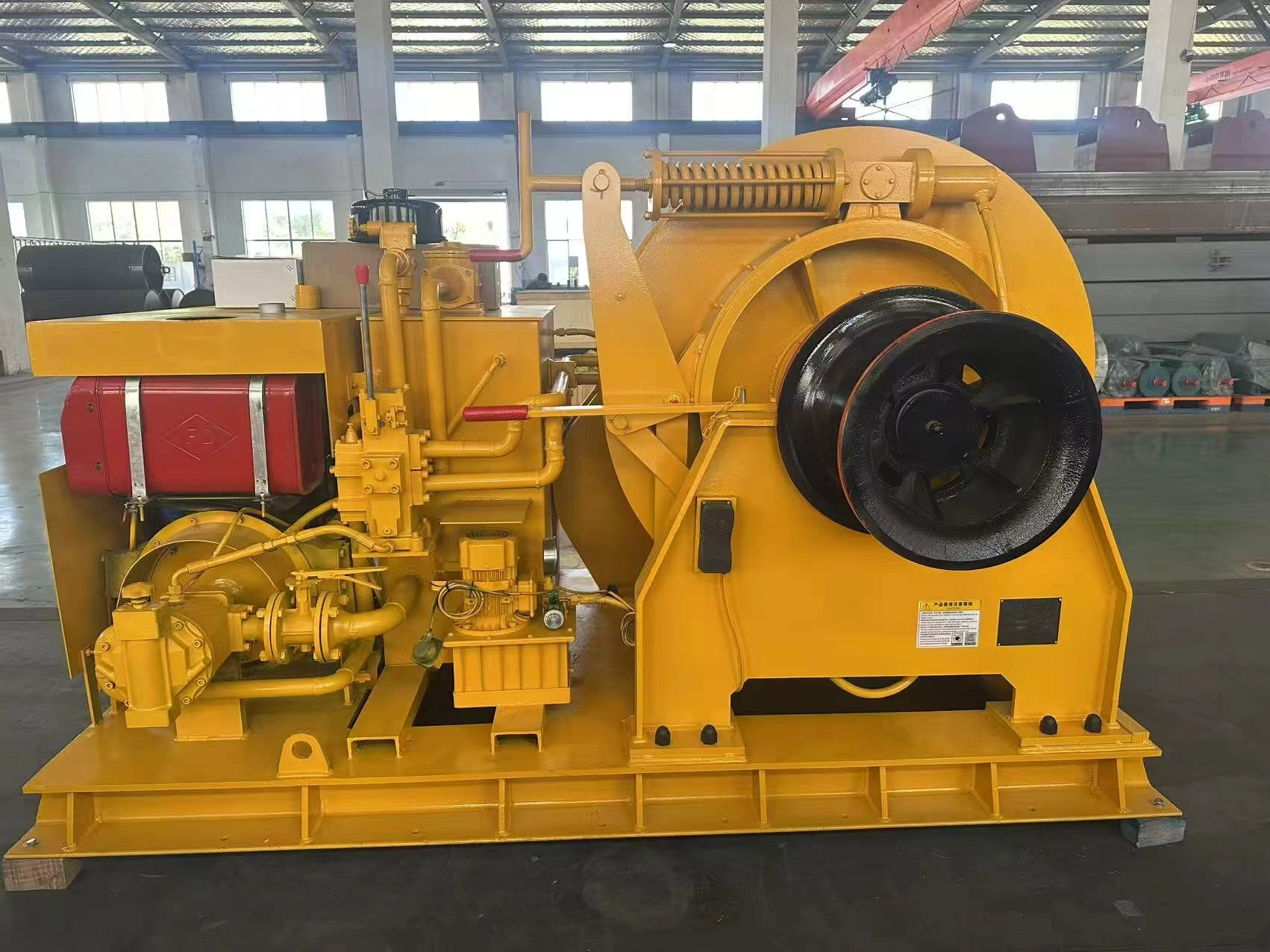
| Diesel Winch | Independent power source | Remote areas, outdoor projects |
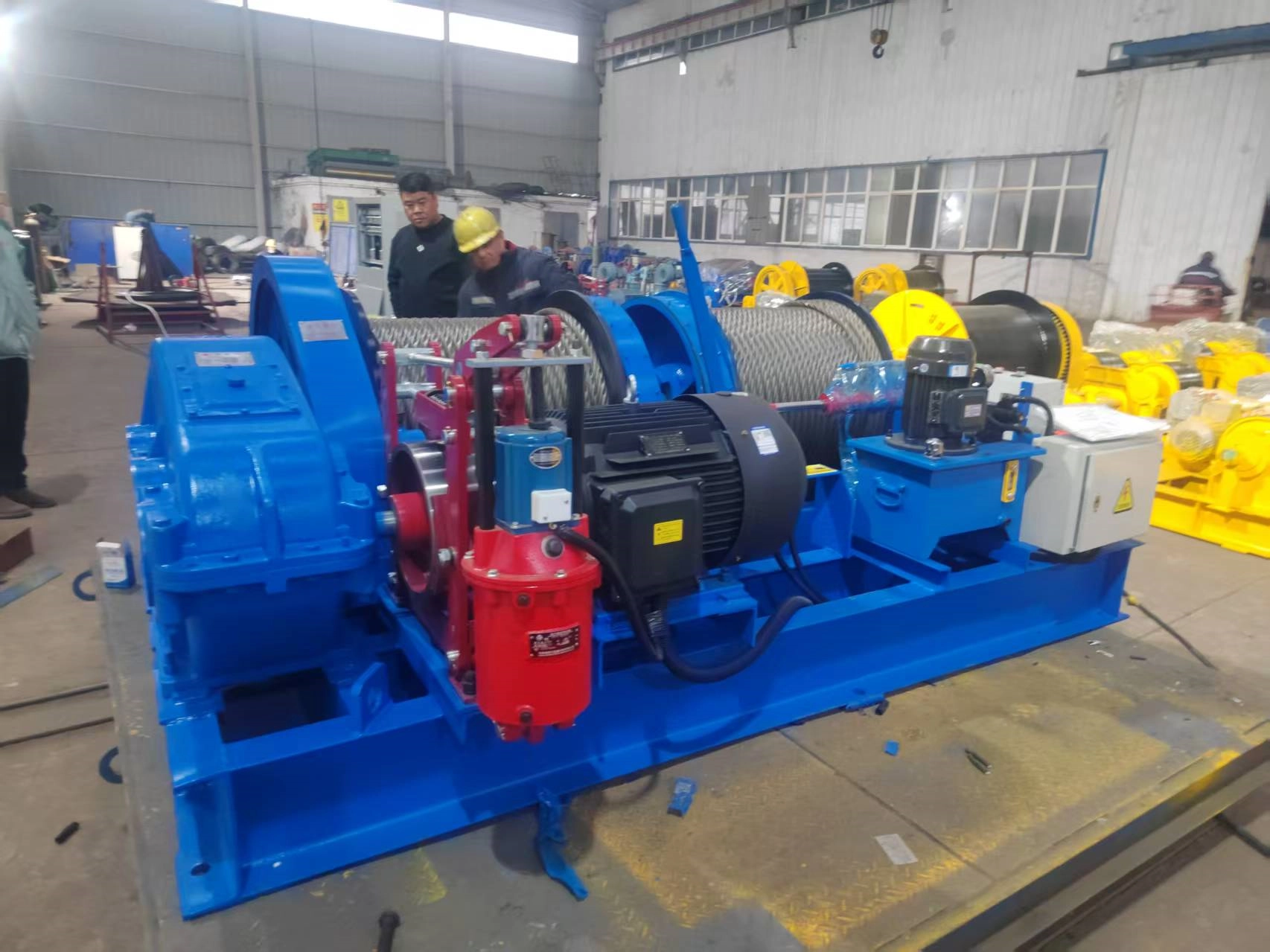
For example, CPWINCH provides customized electric, hydraulic and diesel winch solutions according to project requirements.
Common Mistakes When Choosing Winch Capacity
Choosing Capacity Only Based on Load Weight
A 10-ton load does not always require a 10-ton winch. Factors such as friction, slope and operation frequency must also be considered.
Ignoring Duty Cycle
A winch working several hours per day requires different specifications compared with occasional operation.
Forgetting Safety Margin
Running a winch close to maximum capacity for a long time may reduce service life.
Why Work With a Professional Winch Manufacturer?
A professional manufacturer can help evaluate:
- Required pulling force
- Rope capacity
- Motor power
- Gearbox ratio
- Brake system
- Control method
CPWINCH Group manufactures electric winches, hydraulic winches, diesel winches and customized heavy-duty winch systems for industrial and marine applications.
Calculating winch pulling capacity correctly is an important step before purchasing industrial winch equipment.
The right winch should match not only the load weight but also the working environment, rope arrangement, duty cycle and safety requirements.
For large projects, customized design from an experienced winch manufacturer can help improve efficiency and reduce operational risks.
📩FAQ
Q1: What is winch pulling capacity?
Winch pulling capacity is the maximum force a winch can generate to move or pull a load.
Q2: How do I choose the right winch capacity?
You should consider load weight, friction, rope length, working conditions, and safety factors.
Q3: Is a larger winch always better?
Not necessarily. An oversized winch may increase cost and energy consumption. The correct choice depends on actual project requirements.
Q4: What type of winch is best for heavy pulling?
Hydraulic and electric winches are commonly used for heavy-duty applications. The best option depends on the working environment and power availability.
Q5: Can CPWINCH customize winch equipment?
Yes. CPWINCH provides OEM winch solutions according to customer drawings, capacity requirements and application conditions.