by cpwinch
Share
Marine Winch Selection Guide for Ship Owners and Shipyards
Experience
30+ Years Rich Experience
Digital Solutions
R&D Team standing by
24/7 Support
We are here for you
Choosing a marine winch is not simply about selecting the largest pulling capacity. Different vessels and marine projects require different winch designs. An anchor winch used on a cargo ship, a mooring winch installed on a port vessel, and a towing winch used for offshore operations all have different working conditions.
The correct marine winch should match:
- Vessel type
- Working environment
- Required pulling force
- Rope arrangement
- Operation frequency
- Safety requirements
A proper selection process helps improve operation efficiency, reduce maintenance costs and extend equipment service life.
What Is a Marine Winch?
A marine winch is a deck machinery system designed for pulling, lifting, positioning, or controlling ropes and cables on ships and offshore platforms.Marine winches are commonly used for:
- Anchor handling
- Mooring operations
- Towing operations
- Ship launching
- Offshore equipment deployment
Unlike ordinary industrial winches, marine winches must operate in demanding environments with:
- Salt water exposure
- High humidity
- Continuous vibration
- Heavy working loads
Therefore, marine winches require reliable structures and corrosion-resistant components.
Main Types of Marine Winches
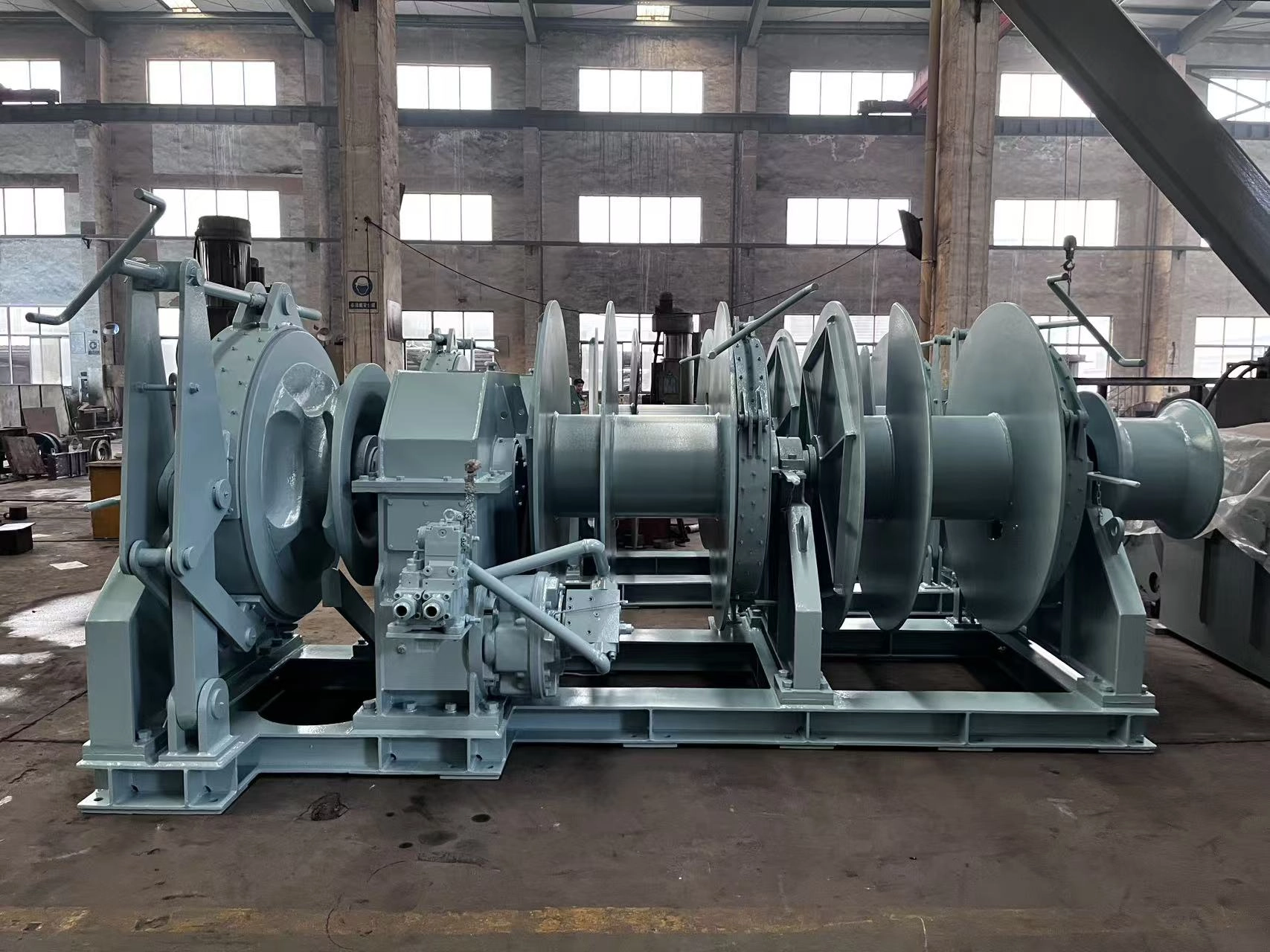
Anchor winches are mainly used for lowering, recovering, and holding ship anchors. Important specifications include:
- Holding load
- Chain diameter
- Chain length
- Brake capacity
- Operation speed
Anchor winches are widely installed on:
- Cargo ships
- Workboats
- Offshore vessels
- Engineering vessels
Mooring winches control mooring ropes when vessels are:
- Docking
- Leaving ports
- Staying alongside terminals
Key factors include:
- Line pull
- Drum capacity
- Rope type
- Automatic tension control
For vessels operating in areas with changing tides or currents, reliable mooring performance is especially important.
Towing winches are designed to pull and control other vessels or floating equipment.
They are commonly used in:
- Tug boats
- Offshore service vessels
- Marine engineering projects
Compared with standard winches, towing winches require:
- Strong braking systems
- High reliability
- Accurate rope control
Key Factors When Selecting a Marine Winch
1. Required Pulling Force
The first step is determining the required pulling capacity. The calculation should consider:
- Vessel size
- Working load
- Environmental conditions
- Safety margin
A winch that is too small may not complete the operation safely. A winch that is too large may increase:
- Equipment cost
- Energy consumption
- Installation requirements
2. Rope or Wire Specification
The rope selection directly affects winch performance. Buyers should confirm:
- Rope diameter
- Rope length
- Breaking strength
- Material type
Common options include:
- Steel wire rope
- Synthetic rope
- Mooring rope
- Anchor chain
The winch drum must be designed according to the selected rope size.
3. Working Speed
Different marine operations require different speeds.
For example:
| Application | Typical Requirement |
|---|---|
| Anchor operation | Stable and controlled speed |
| Mooring | Adjustable speed |
| Towing | Strong pulling force with controlled movement |
A higher speed is not always better. Stability and control are often more important in marine applications.
4. Power System
| Type | Advantages | Typical Applications |
|---|---|---|
| Electric Marine Winch | Simple operation and easy maintenance | General vessels and shipyards |
| Hydraulic Marine Winch | High torque and strong overload ability | Offshore and heavy-duty operations |
| Diesel Marine Winch | Independent operation | Remote marine projects |
The best option depends on vessel design and available power supply.
Common Mistakes When Buying a Marine Winch
Selecting Only Based on Capacity
Capacity is important, but it is not the only factor.
A marine winch must also match:
- Vessel operation
- Rope system
- Duty cycle
Ignoring Future Requirements
Some vessels may later require:
- Different rope sizes
- Higher working loads
- Remote control systems
Considering future upgrades can reduce replacement costs.
Choosing Standard Products for Special Projects
Marine projects often have unique requirements.
Examples:
- Offshore operations
- Special vessels
- Ship launching systems
Customized solutions are often more suitable than standard equipment.
Why Choose CPWINCH Marine Winch Solutions?
CPWINCH provides customized marine winch equipment for different vessel and industrial applications.
Our solutions include:
- Anchor winches
- Mooring winches
- Towing winches
- Capstans
- Customized deck machinery
With experience in heavy-duty winch manufacturing, CPWINCH supports customers with:
- Engineering consultation
- OEM customization
- Production according to project requirements
Calculating winch pulling capacity correctly is an important step before purchasing industrial winch equipment.
The right winch should match not only the load weight but also the working environment, rope arrangement, duty cycle and safety requirements.
For large projects, customized design from an experienced winch manufacturer can help improve efficiency and reduce operational risks.
📩FAQ
Q1: How do I choose the right marine winch?
You should consider the vessel type, pulling capacity, rope specifications, working speed, and operating environment.
Q2: What is the difference between a marine winch and a normal winch?
Marine winches are designed for harsh environments with corrosion protection, stronger structures, and marine-specific requirements.
Q3: Which marine winch is used for ship mooring?
Mooring winches are mainly used for controlling ropes during vessel docking and positioning.
Q4: Are marine winches customized?
Yes. Marine winches are often customized according to vessel design, capacity requirements, and installation conditions.
Q5: What power source is best for marine winches?
Electric and hydraulic systems are the most common choices. The best option depends on vessel requirements and working conditions.